Eliminated manual claim form filling by building a digital autofill flow via Claude that cut user errors and reduced support tickets by over 60%.
1 Month
Timeline
Independent Execution
Team
Independent Execution
Landscape
As a platform, Pazcare acts as the critical bridge between the end-user and the insurer. We faced a dual-stakeholder problem: insurers legally required claims to be submitted on their specific, legacy physical forms, but modern users expect a seamless digital experience. The friction of downloading, printing, manually writing, and re-uploading documents was the biggest bottleneck in our claims journey. We needed a solution that satisfied the strict compliance formats of the insurers while completely shielding the user from the administrative burden.


SUMMARY
Problem
The insurance claim process relied on outdated, rigid physical forms mandated by insurers. Users were forced to download, manually fill, and scan these documents, leading to high error rates, missed fields, and a frustrating user experience.
Solution
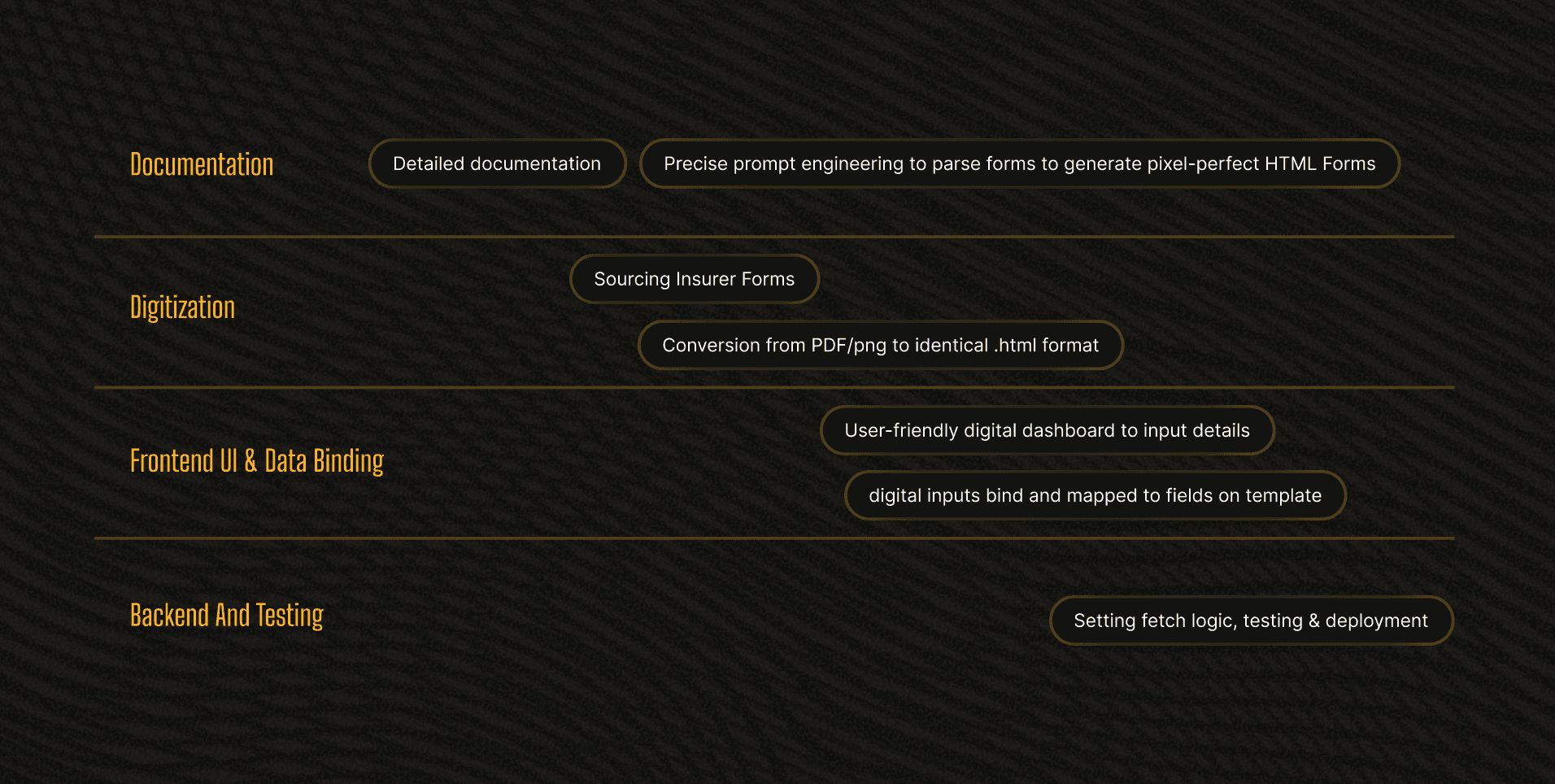
Engineered an end-to-end digital auto-fill pipeline. Utilized Claude Code to convert static physical forms into dynamic HTML templates, pairing them with a clean, digital frontend dashboard that automatically maps user inputs to the correct physical form fields.
Impact
Eliminated manual data entry errors, reduced form completion time by an estimated 75% (from roughly 20 minutes of manual paperwork to 5 minutes of digital entry), and drastically lowered claim rejection rates caused by missing information.
I took complete end-to-end ownership of this project, operating autonomously across both the design and engineering spectrums. By utilizing Claude Code as my technical counterpart, I was able to bypass traditional engineering bottlenecks. I managed the repository, reviewed the AI-generated code, tweaked the HTML for pixel-perfect alignment, and deployed the frontend validation systems entirely on my own.

Journey
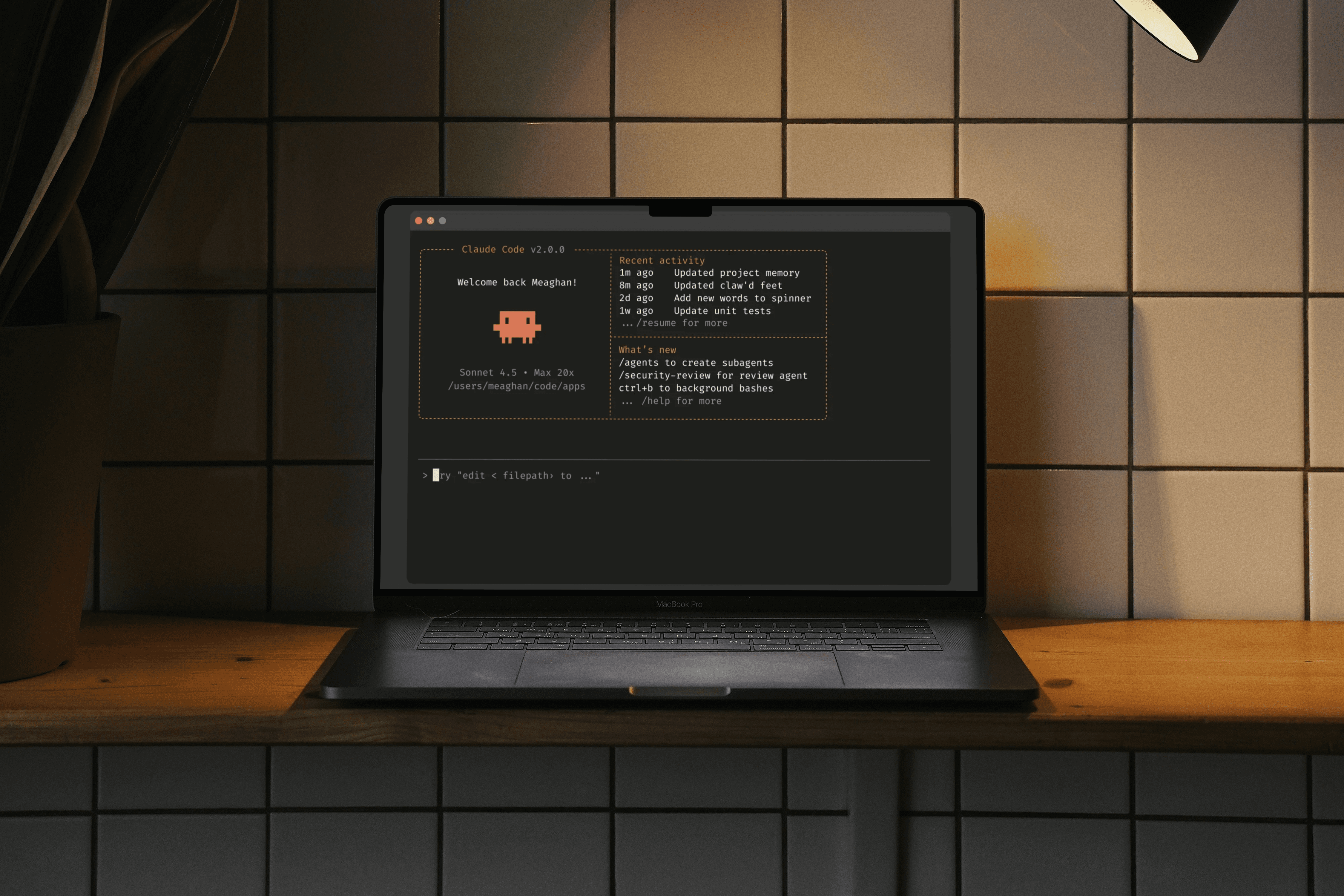
To execute this independently, I operated as a hybrid designer-developer, heavily leveraging Claude Code, an advanced, agentic AI coding assistant that integrates directly into the development environment to read architecture, write code, and execute complex technical translations.
Hurdle:
Data Integrity and System Guardrails Because the final output is sent directly to insurers, there was zero margin for error. If the HTML form generated with missing fields or incorrect data types, the claim would be instantly rejected, defeating the purpose of the feature.
Solution:
I implemented strict frontend validation checks before any data was passed to the HTML template. I built logic to ensure no empty fields could pass through and that all data formats were correct. Additionally, I designed a "Preview State" that highlights exactly where the user's information is being populated on the final form, giving them the flexibility to review and edit their digital inputs before generating the final document.

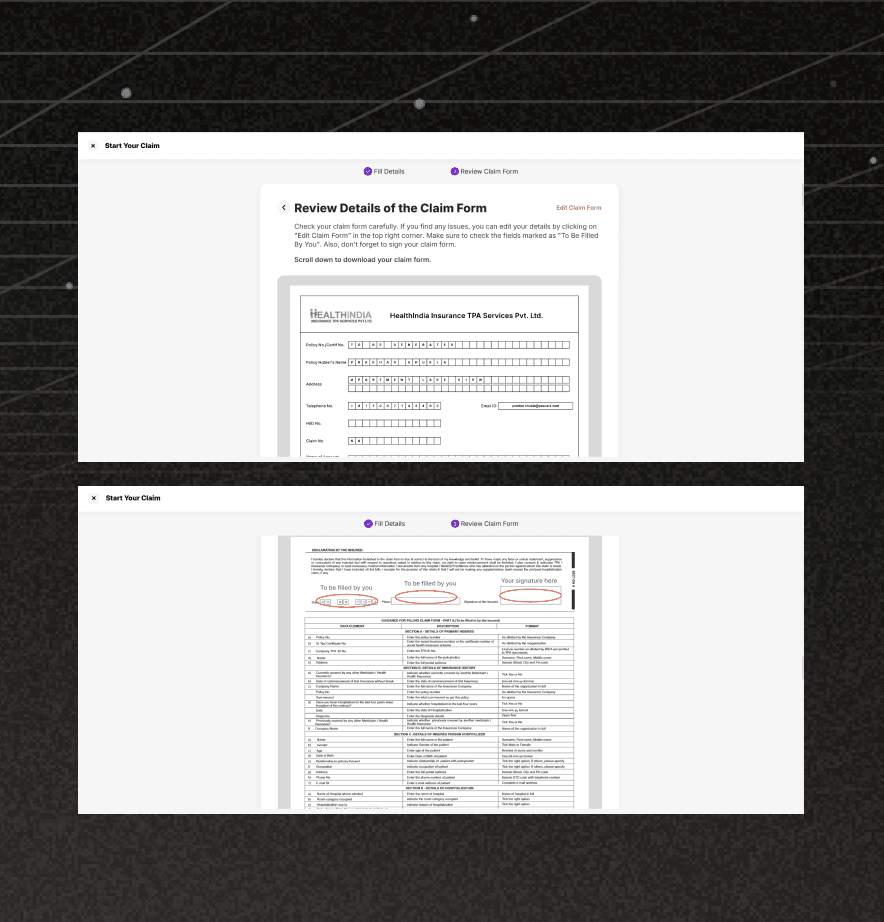
This project successfully modernized a legacy bottleneck. While the current flow still requires the user to download the final auto-filled form for a physical signature and re-upload, the heavy lifting of manual data entry has been completely eradicated. Key Metrics Achieved: 1. ~75% Reduction in user time-to-submission, turning a tedious paperwork task into a rapid digital flow. 2. Eliminated Empty-Field Errors: Strict validation logic reduced insurer queries and claim rejections caused by missing user information. 3. Scalable Infrastructure: Established a backend database of HTML insurer templates that can be easily updated or expanded for future fully-digital (e-signature) iterations.
